Starlink
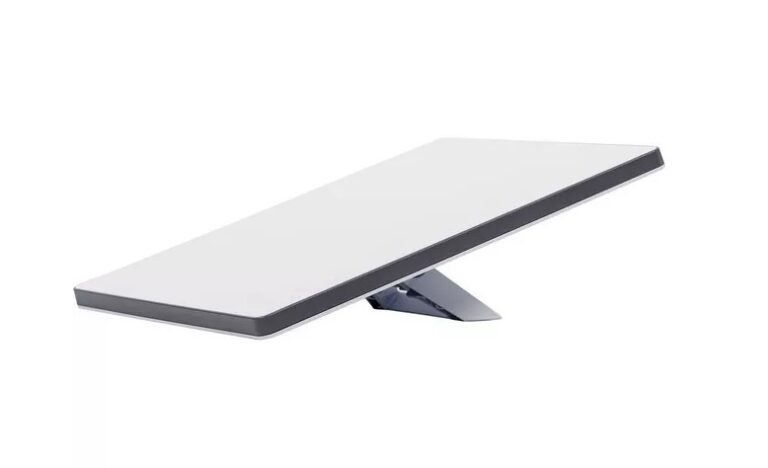

Two vessels can carry identical Starlink terminals and receive entirely different levels of service, because the service plan behind the terminal determines coverage, priority, and what happens once the monthly data allowance is consumed.
Understanding how Starlink Business service tiers behave in open ocean rather than alongside is essential before committing a fleet to a connectivity contract.
Starlink Business is the commercial arm of the Starlink product family, distinct from residential and Roam consumer plans. For maritime operators it is associated with priority data allocations, business-grade support and management tooling suited to running more than one terminal.
Critically, it also provides the correct contractual basis for commercial operation. Consumer plans are not intended for commercial vessels operating in international waters, and using them that way places an operator outside the terms of service.
Starlink has consolidated its earlier maritime and mobility products into a smaller number of plan families, broadly split between coverage within a single country's borders and coverage that extends globally, including open ocean.
That distinction is the most important part of the procurement process. Plans limited to national coverage suit fixed shore facilities, port offices and vessels that never leave home waters, and they cost materially less. Plans with global and oceanic coverage are what an ocean-going commercial vessel actually requires.
The common error is specifying the cheaper structure for a vessel whose operating profile occasionally takes it beyond territorial waters. The saving disappears the first time the vessel goes dark mid-passage.
Plan names, allowances and terms are revised periodically by Starlink, and eligibility can depend on vessel type and registration. AST Networks can confirm which structure applies to your vessels and operating pattern.
This is the commercial risk that catches fleets out, and it deserves attention before contract signature rather than after.
Priority Data is allocated monthly. Once a vessel consumes its allowance, performance is substantially reduced for the remainder of the billing period. The connection remains available for basic messaging and light telemetry, but not for video calls, remote engineering support, chart updates or crew welfare at any useful standard.
Additional data can generally be purchased to restore performance, so the situation is recoverable. The problem is that unmanaged consumption tends to be discovered at the point of failure rather than in advance, and the vessels that exhaust an allowance are rarely doing so through operational traffic. Crew streaming and unattended software updates consume the allocation that navigation, telemetry and remote support depend on.
This is the argument for treating airtime as something to be governed on board, not simply purchased.
Starlink operates a direct breakout model. Traffic passes from the terminal to Starlink's own ground infrastructure rather than through a provider's shoreside network, which means usage cannot be shaped after it leaves the vessel. Control has to be applied on board.
Routing the Starlink feed through the LinkBox+ intelligent router allows operators to:
| Operating Profile | Coverage Required | Main Airtime Risk | Onboard Control Priority |
|---|---|---|---|
| Port offices & shore facilities | National waters only | Low variability, predictable month to month | Separating guest and visitor Wi-Fi from business systems |
| Coastal workboats & CTVs | National waters, in-motion use | Crew and passenger use during transit and alongside | Least-cost routing to cellular in port; isolated passenger VLAN |
| Offshore support & survey vessels | Global, including open ocean | Sustained high-volume operational and survey data | Prioritising telemetry and remote engineering over general traffic |
| Deep-sea transits & cargo | Global, including open ocean | Extended periods with no alternative bearer available | Firm crew quotas; hybrid failover to VSAT and L-Band |
| Mixed fleets | Varies by vessel and route | One vessel exhausting its allowance affects the wider budget | Fleet-wide visibility with per-vessel caps |
Starlink Business plans can be arranged directly. For a single vessel with simple requirements, that may be sufficient. For a fleet, working through a maritime connectivity provider changes what is on the table.
Starlink Business has made LEO connectivity commercially viable for vessel classes that could never justify traditional VSAT. But the plan behind the terminal determines whether that connectivity holds up in the second half of the month, in international waters, and under the terms your charterer expects.
AST Networks designs connectivity around the operating profile of the vessel by combining certified hardware, hybrid multi-orbit resilience through MODULA, and onboard traffic control with LinkBox+.
To discuss which Starlink Business service structure suits your fleet, and how it fits alongside your existing satellite and cellular services, contact the AST Networks team for a tailored review of your requirements.
Equipment we supply for the connectivity covered above. Each product page has a downloadable product sheet.
Ask an expert
Whether you are comparing networks, choosing equipment or checking what your vessel needs, our team will give you a straight answer. We usually reply within one working day.