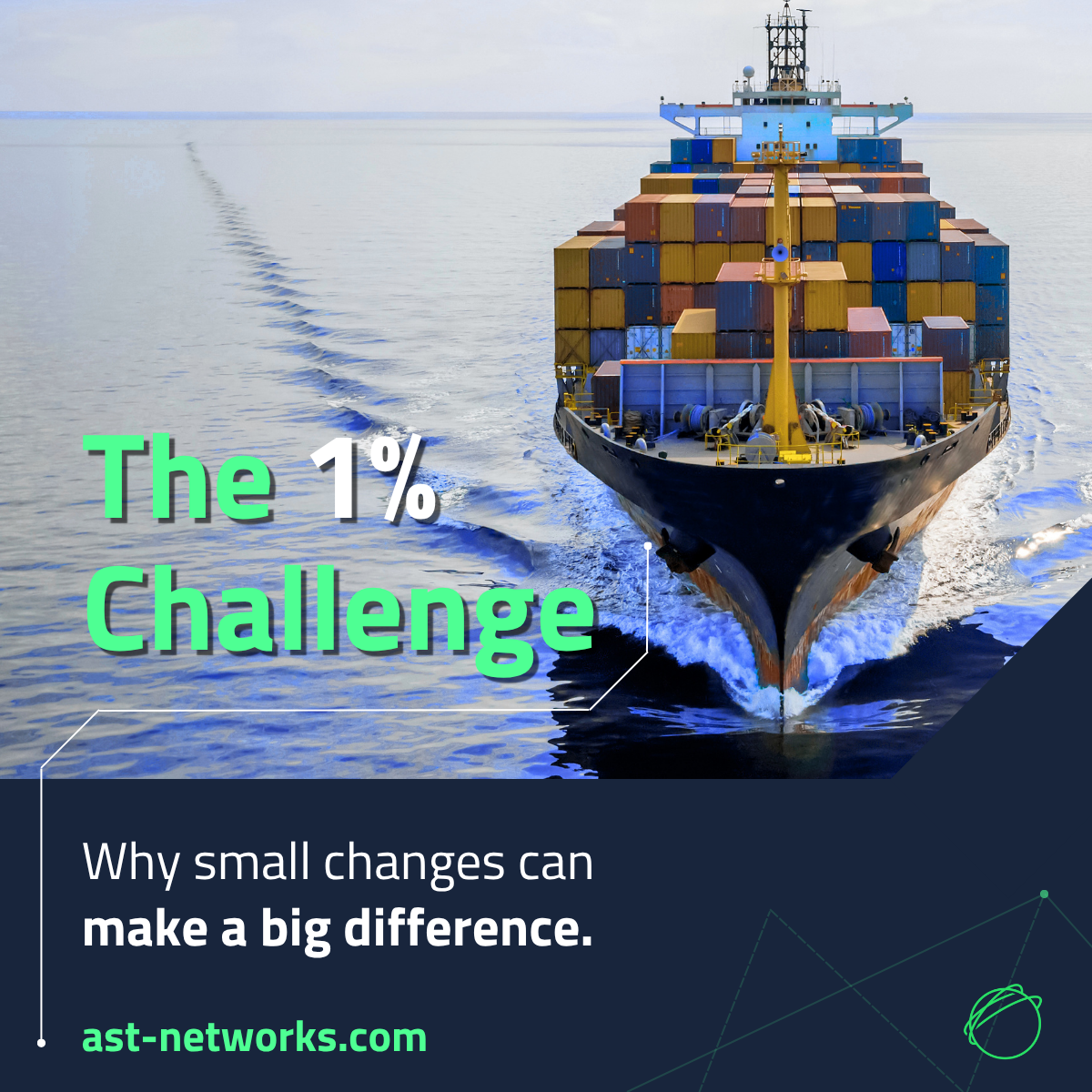
The AST Networks 1% Challenge.
Operating vessels is complicated, and there’s always something to worry about; major equipment failure, a connectivity outage, unexpected downtime, rising cost of fuel, or systems simply not doing what they should. It’s not always obvious where to look to find the problem, so often operators look in the wrong place.
Big operational improvements don’t always start with a major overhaul, but by finding the small things and making them work better.
A 1% improvement doesn’t sound like much, and on its own it can be easy to ignore. But across a fleet of vessels, or 365 days, small improvements add up. 1% less downtime, 1% less fuel usage, 1% smarter use of connectivity, 1% fewer avoidable problems.
The point isn’t that each vessel must improve by exactly 1%, it’s that there are opportunities for improvements everywhere if you know where to look, and we now have access to systems that give operators the visibility to find where improvements can be made.
This is important as vessels are now more connected than ever and rely on more dependent digital systems. Maritime connectivity is more than just crew connectivity – it supports operational communications, access to business systems, remote assistance, data, and digital tools that keep the vessel running.
The more connected a vessel is, the more opportunities we have to understand how effectively it is operating, the challenge is using that information to make improvements. Operators now have access to the data to see how existing systems are being used and determine where even a 1% improvement could make a valuable contribution to overall performance.
Vessels generate huge amounts of information – from onboard equipment and machinery to communications, navigation, and operational systems – the challenge isn’t lack of data; it’s knowing where to look to find it.
A small change in performance might be nothing, or it might be the first indication that something onboard needs attention. A little more downtime here, a little more data usage there, recurring connectivity problems, and systems not performing quite as they should. Individually these things might seem insignificant, but over time, or across large fleets, they can equal big savings from very small changes.
This is where maritime digitalisation plays an important role. Connected vessels give operators a clear view of what is happening onboard, while access to this information makes it easier to identify trends, investigate recurring issues and understand what improvements are possible – using the data your vessel already collects means you can make your systems work and harder and smarter.
Making your systems work smarter for you is simply making better use of what you already have onboard. For AST Networks that’s an important part of how we approach maritime technology, we don’t believe every vessel challenge needs a new solution, it’s often about improving the existing solutions already onboard – even a 1% improvement can make a big difference. For fleet managers these small improvements are particularly significant when applied across multiple vessels. This is why visibility, reliable vessel data, and effective use of existing technology play an important role in fleet management
What could make a difference to your vessel? Whether that’s better connectivity, more visibility, less complexity, or earlier warning of an emerging issue, it’s the little things that can make unexpected improvements over time, and it’s about using what you have to the best of its abilities.
There isn’t one answer, and that’s the point. Over the coming weeks, we’ll be looking at some of the different 1% challenge opportunities across maritime connectivity and digitalisation and asking what these small improvements could mean in the real-world.
Got a 1% challenge? Talk to us and let’s see how we can help. It worked for the British Cycling Team - it can work for you, too.
Need access to vessel telemetry to help make improvements? Speak to AST Reygar today.
Ask an expert
Whether you are comparing networks, choosing equipment or checking what your vessel needs, our team will give you a straight answer. We usually reply within one working day.