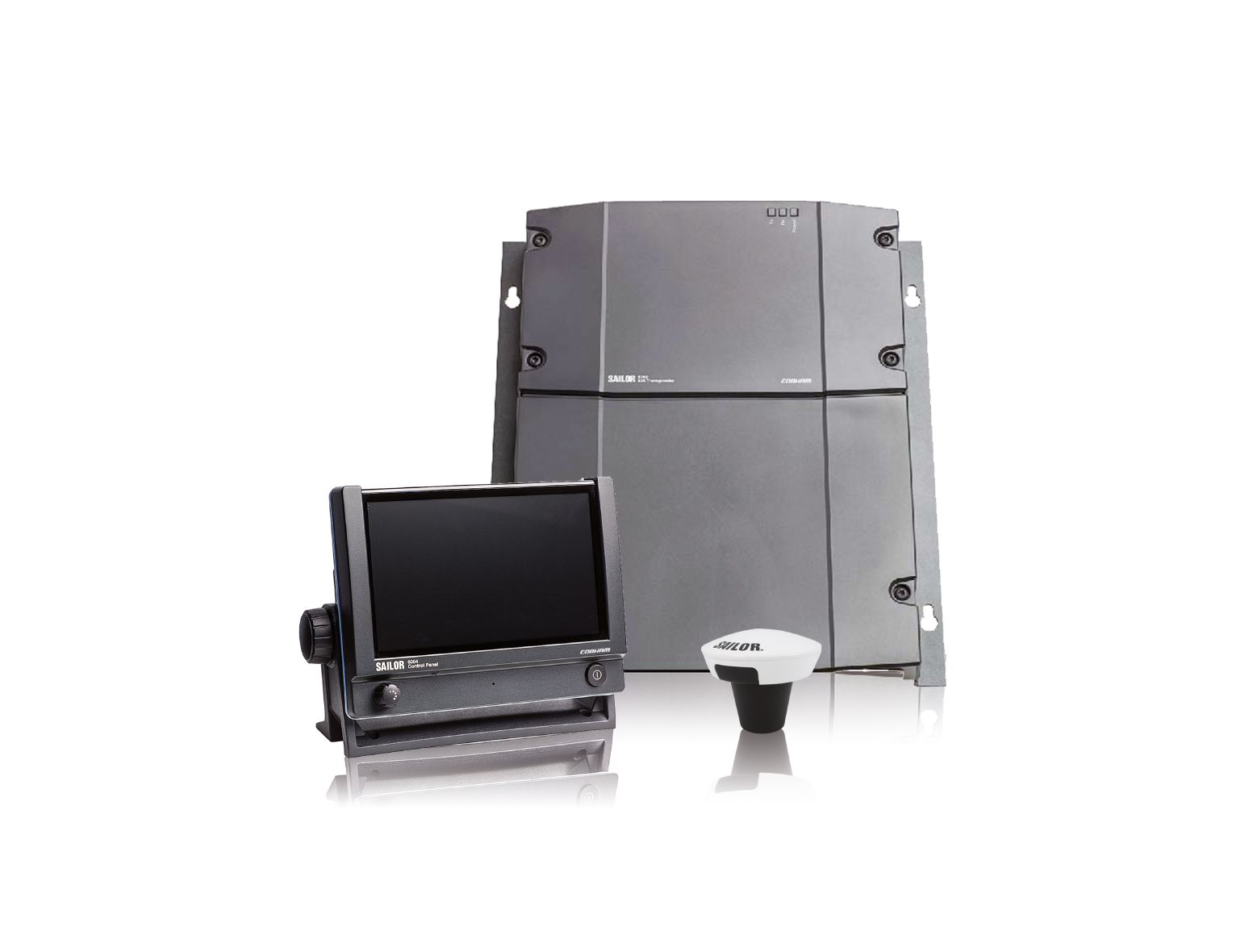
Maritime satellite communications are a necessity because commercial maritime vessels are like mobile digital offices. They stream machinery telemetry to shore, maintain real-time position reporting, process digital logbooks, and deliver broadband Wi-Fi in order to enable connectivity to support crew welfare. With this in mind, operating in oceanic sectors or remote offshore fields requires a resilient, multi-layered connectivity architecture.
When considering maritime satellite communications architecture, a one-size-fits-all approach is not suitable. For example, a Crew Transfer Vessel (CTV) operating off the North Sea has radically different bandwidth, power, and hardware requirements compared to a deep-sea container ship crossing the Pacific or a dynamic positioning (DP2) subsea construction vessel.
This guide breaks down the core architecture of modern maritime satellite communications, outlining tailored hardware, bandwidth, and routing configurations for three distinct vessel profiles.
The Shift to Multi-Orbit Hybrid Networks for Maritime Satellite Communications
Historically, vessels relied on a single maritime satellite communications link—either Geostationary Orbit (GEO) VSAT for broadband or L-band satellite connections for basic voice and low-speed data.
While GEO VSAT provides wide-area coverage and guaranteed bandwidth, its high orbit (approximately 35,786 km above the equator) introduces latency of 500ms to 700ms. Conversely, Low Earth Orbit (LEO) constellations orbit significantly closer to Earth (500 km to 1,200 km), reducing latency to under 100ms and delivering high throughput. However, LEO connections can experience signal occlusion or capacity constraints in high-density corridors.
To achieve complete reliability, modern vessel architectures combine multiple satellite layers into a single hybrid network:
By placing an intelligent bonding router—such as the LinkBox+—at the centre of the onboard network, traffic automatically routes across the optimal link based on signal quality, data cost, and operational priority.
Maritime Satellite Communications: Tailored Satcom Configurations by Vessel Type
To illustrate how hardware and airtime integrate in practice, below are recommended maritime satellite communications setups for three core vessel classes.
1. Crew Transfer Vessels (CTVs) and Workboats
Operating Profile: High-speed coastal and offshore wind farm operations, operating up to 30–50 nautical miles offshore.
Core Requirements: Low structural weight, compact antenna footprints, low power draw, low-latency data for live engine telemetry, and fast Wi-Fi during transit.
Recommended Hardware Setup:
Primary High-Speed Link:Starlink Maritime Solutions utilising a flat High Performance panel. This provides low-latency, high-throughput broadband for passengers and live telemetry streaming during transit.
Resilient Safety & Backup Link:Thales VesseLINK 700 (Iridium Certus). Compact and solid-state with no moving parts, the VesseLINK 700 provides weather-proof voice and data backup that operates independently of sea conditions.
Network Management: LinkBox+. VLAN segregation keeps operational telemetry — such as AST Reygar BareFLEET feeds — on a separate network from passenger and crew Wi-Fi, preventing congestion during technician transfers. Least-cost routing switches to cellular while alongside, conserving the Starlink allowance for time at sea, and the unit is fully manageable remotely by the AST Networks support team.
2. Offshore Support Vessels (SOVs, Survey & Construction Vessels)
Operating Profile: Long-term station-keeping in remote offshore fields, subsea survey operations, and heavy DP2 operations.
Core Requirements: Enterprise-grade uptime, strict Service Level Agreements (SLAs), guaranteed Committed Information Rate (CIR), multi-antenna redundancy to overcome crane or superstructure blockage, and secure cloud connectivity.
Recommended Hardware Setup:
Primary Low-Latency Data Engine: Dual Eutelsat OneWeb Enterprise Terminals. Operating two OW70L terminals eliminates mast blockage during vessel rotation, providing high-speed, low-latency bandwidth backed by dedicated CIR profiles for real-time video feeds and subsea data processing.
Primary High-Availability VSAT:Cobham SAILOR 600 XTR Ka-Band System or Intellian VSAT Systems. Delivers stable, high-throughput GEO satellite connectivity to ensure continuous, SLA-backed operational throughput during severe weather events.
Operating Profile: Global ocean crossings along international trade corridors, spending extended periods beyond terrestrial networks.
Core Requirements: Global ocean-coverage footprint, predictable fixed monthly operational costs, automated satellite beam-switching, compliance with GMDSS safety mandates, and bandwidth segregation for crew welfare.
Recommended Hardware Setup:
Global Operational Backbone:AST Networks Global Maritime VSAT paired with a 1-metre Intellian or Cobham SAILOR Ku-Band antenna. Provides predictable, wide-area global coverage with Automatic Beam Switching (ABS) across transit routes.
LEO Overlay for Crew Welfare:Starlink Maritime Solutions or OneWeb LEO. Serves as a high-speed data pipe dedicated to crew video calls, messaging, and training platforms, isolated from vessel operational control networks.
Secondary L-Band Backup:Thales VesseLINK 700 or Lars Thrane LT-4200 (Iridium Certus 200). Ensures continuous, low-cost operational voice and basic data links globally regardless of rain fade or severe sea states.
Maritime Satellite Communications: Cybersecurity and Bandwidth Management at Sea
Deploying high-speed maritime satellite communications increases onboard digital capability, but it also expands the vessel's cyber-attack surface. IMO cyber risk management mandates require fleet operators to secure vessel IT and OT (Operational Technology) networks against unauthorised access.
AST Networks addresses this at two distinct points in the architecture: onboard at the network edge, and shoreside within the INTEGRA network. Both are delivered as MODULA building blocks.
Onboard control: LinkBox+
The LinkBox+ sits at the centre of the vessel network, where it separates and protects traffic before it ever reaches a satellite link:
Network segregation: VLANs isolate operational and OT traffic from business and crew networks, so a compromised crew device cannot reach navigation or machinery systems.
Traffic prioritisation: Critical operational data — ECU telemetry, ECDIS updates, and administrative email — takes priority over crew internet, with automatic least-cost routing across the available links.
Edge security: Enterprise-grade encryption, firewalls, and SSL inspection filter traffic at the vessel boundary, blocking malicious domains and unauthorised software updates.
Shoreside control: INTEGRA
INTEGRA applies application-level policy at the point traffic reaches AST Networks' ground infrastructure, with points of presence in London, Sydney, and New York:
Real-time application visibility: Identifies what is genuinely consuming bandwidth, by application category, across the fleet.
User quotas and access controls: Allows superintendents to allocate daily or monthly data allowances per crew member, preventing unexpected airtime overages.
Fleet-wide reporting: Consistent usage intelligence across every vessel, viewed through My AST Portal.
Designing a maritime satellite communications setup requires more than purchasing standalone hardware. Vessel operators require ongoing support to ensure uptime across global trade routes.
AST Networks delivers complete managed services for commercial shipping and offshore fleets:
Global Installation and Surveying: Certified field engineers conduct onboard site surveys, antenna positioning assessments, and cable runs to optimize line-of-sight and reduce RF interference.
24/7 Global Customer Technical Support: Round-the-clock technical assistance provided by experienced satcom engineers to resolve antenna tracking issues, network configuration errors, or airtime modifications.
Remote Network Diagnostics: Engineers utilise secure remote access gateways to monitor hardware health, update firmware, and reconfigure onboard routers without requiring a physical technician visit.
Flexible Data Pooling: Customisable airtime contracts allowing operators to pool data allowances across multiple vessels, accommodating seasonal fleet deployments.
Optimise Your Maritime Satellite Communications Architecture
Relying on outdated, single-band systems for maritime satellite communications or unmanaged hardware introduces operational friction, higher airtime costs, and cyber vulnerabilities.
Implementing a multi-orbit, hybrid maritime satellite communications solution engineered by AST Networks provides the low-latency speed, operational resilience, and network security required to run a connected, efficient commercial fleet.
Ready to upgrade your vessel's maritime satellite communications setup?
Whether you are comparing networks, choosing equipment or checking what your vessel needs, our team will give you a straight answer. We usually reply within one working day.