
SAILOR
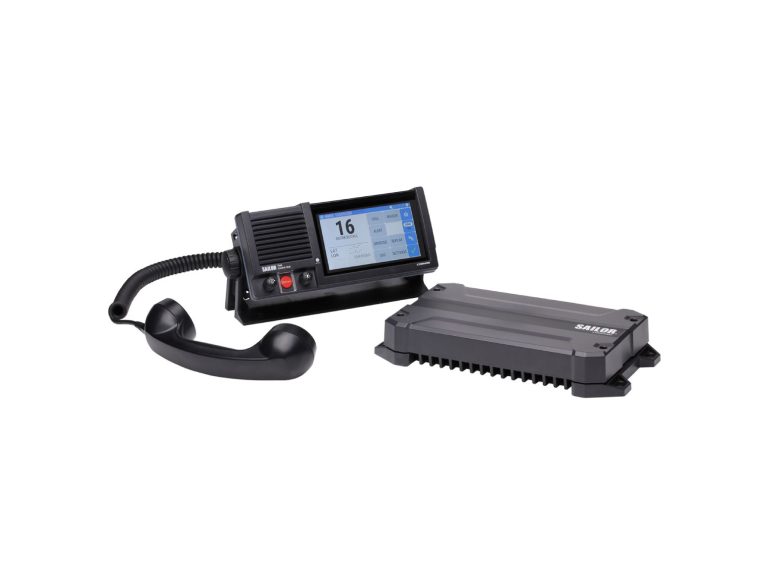

A marine VHF radio is the most important piece of communication equipment on almost any vessel. It is how you call the coastguard, talk to other ships and port control, and raise the alarm in an emergency. This marine VHF radio buying guide explains the choices that matter: fixed or handheld, DSC class, GMDSS and survival craft rules, radios for hazardous areas, and the UK licences you need.
Marine VHF works on a set of international channels between 156 and 162 MHz. Channel 16 is the international distress, safety and calling channel, and Channel 70 is reserved for Digital Selective Calling (DSC). VHF is line of sight, so range depends mainly on the height of the antennas at each end rather than on transmit power alone. A fixed radio with a masthead antenna will reach much further than a handheld held at deck level.
DSC adds a digital layer to voice calls. A DSC radio has a unique MMSI number and, with a position input, can send a distress alert with your identity and location at the press of a button. It can also call another vessel or a coast station directly, like dialling a phone.
Most vessels need both. A fixed radio is the main station: it runs from the boat's power supply, uses an external antenna and gives the best range. A handheld is the backup, the radio for the deck, the tender or the crew, and the one you take into a liferaft.
DSC radios are built to different classes. Class A is the full specification for SOLAS ships, the commercial vessels covered by the international Safety of Life at Sea convention, and is used as part of a GMDSS installation. Class D is designed for non-SOLAS vessels such as workboats, fishing boats and leisure craft. It gives you DSC distress alerting and calling in a simpler, lower-cost radio.
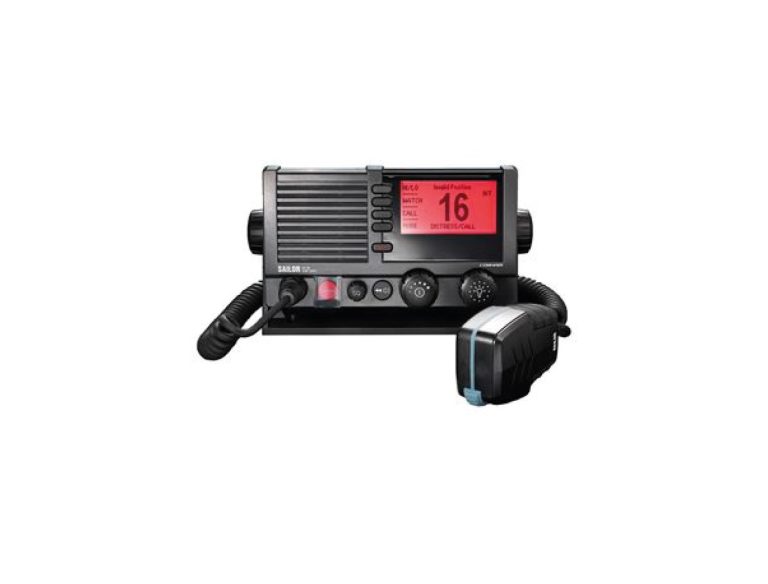
For SOLAS vessels, the SAILOR 7222 VHF DSC Class A can be installed on its own or as the core of a SAILOR GMDSS console, alongside mini-C, MF/HF, NAVTEX and AIS.
The Global Maritime Distress and Safety System (GMDSS) sets out the radio equipment SOLAS ships must carry. Under SOLAS Chapter III, passenger ships and cargo ships of 500 gross tonnage and over must carry at least three two-way VHF radiotelephones for use in survival craft, and cargo ships of 300 to 500 gross tonnage must carry at least two. Our introduction to the GMDSS explains the wider system.
On tankers, gas carriers and offshore installations, a standard handheld can be a source of ignition. ATEX-certified radios are intrinsically safe, which means they are designed so they cannot ignite a flammable atmosphere. If your crew work in these areas, an ATEX radio is not optional.
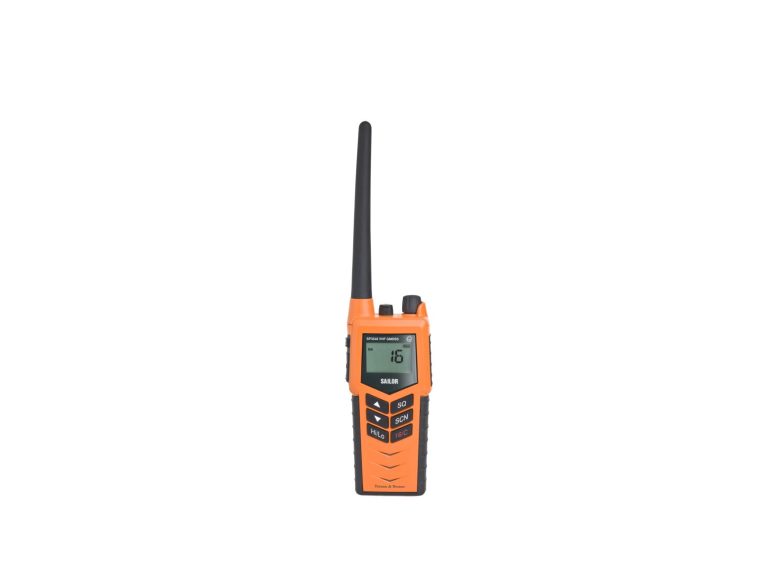
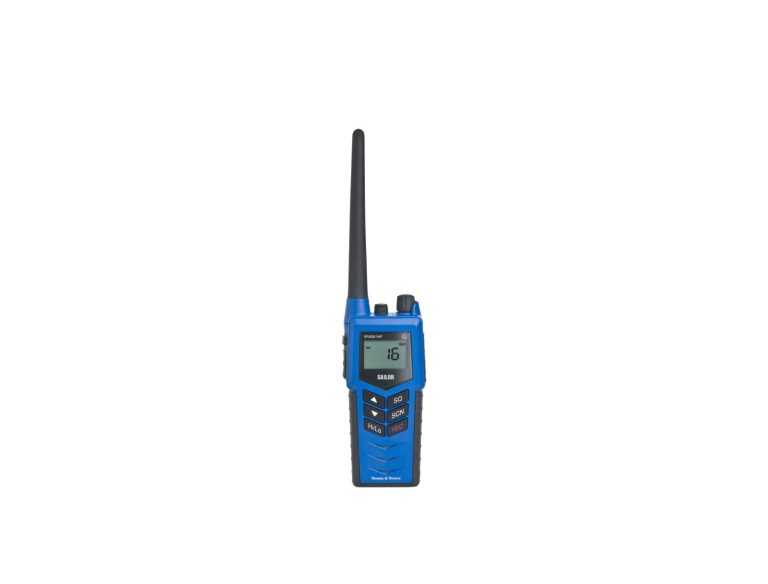
The SAILOR SP3530 is an ATEX portable VHF built for the offshore and tanker environment, and the SP3540 above adds GMDSS approval. For on-board UHF systems, the SAILOR SP3560 is an ATEX portable UHF radio.
| Your situation | What to look for | Radios to consider |
|---|---|---|
| SOLAS ship needing GMDSS VHF | DSC Class A, console integration | SAILOR 7222 |
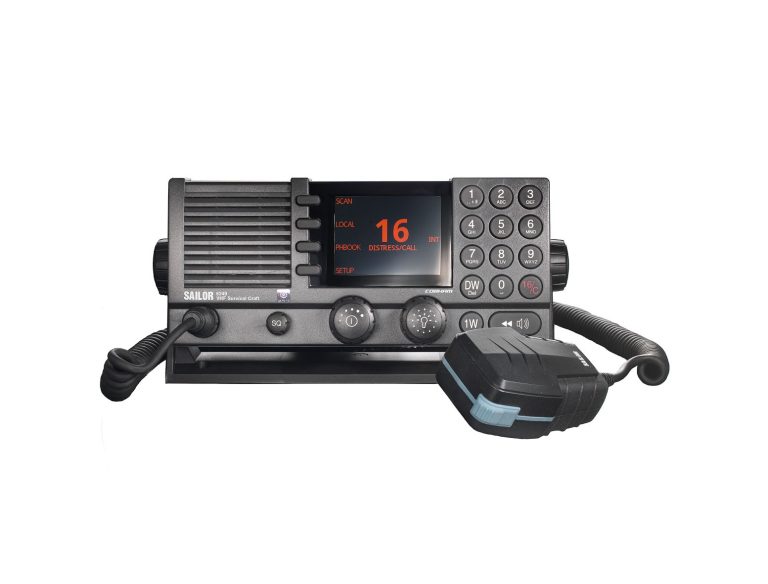
| Survival craft equipment | GMDSS handheld or fixed survival craft VHF | SAILOR SP3540, SAILOR 6249 |
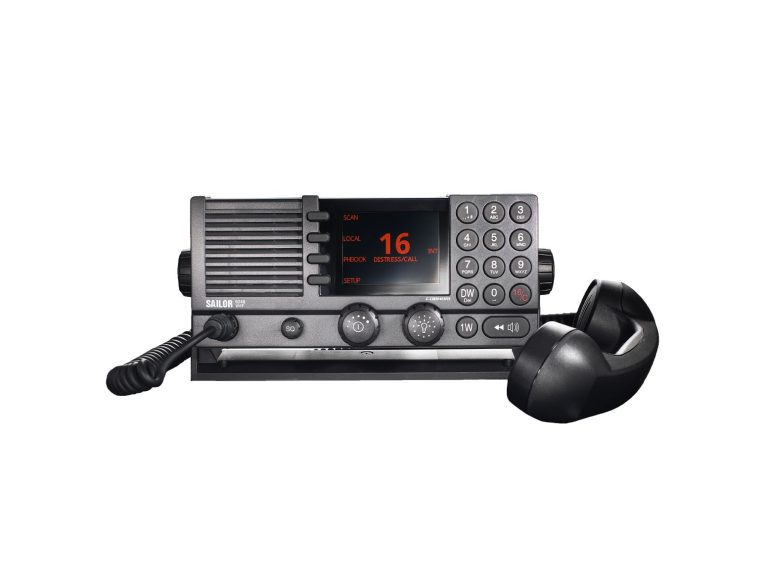
| Workboat or fishing vessel | Rugged fixed VHF, AIS receive | SAILOR 6248, SAILOR 6217 |
| Tanker or offshore installation | ATEX certification | SAILOR SP3530, SAILOR SP3540 |
| Crew communication on deck | Glove-friendly handheld, privacy | SAILOR SP3520B, SAILOR SP3515 |
For a complete safety and communications fit, see our maritime safety and GMDSS solutions.
VHF travels in line of sight, so range depends on antenna height at both ends. A fixed radio with a masthead antenna reaches much further than a handheld, and calls to a coast station with a tall shore antenna reach further again.
DSC is strongly recommended for any vessel going to sea. One button sends a distress alert with your MMSI and position, which is faster and more reliable than a voice Mayday alone. SOLAS ships must carry DSC as part of the GMDSS.
ATEX certification shows the radio is safe to use in an explosive atmosphere, such as around cargo tanks or on an offshore platform. Ordinary radios should not be used in these areas.
Yes. In the UK, a Ship Portable Radio Licence lets you use a handheld on different vessels within UK territorial waters, rather than tying it to one vessel's Ship Radio Licence.
AST Networks supplies, installs and supports marine VHF and GMDSS equipment for commercial fleets, with a 24/7 support team. Talk to us about the right radios for your vessels, or call +44 (0)1493 441 485.
Ask an expert
Whether you are comparing networks, choosing equipment or checking what your vessel needs, our team will give you a straight answer. We usually reply within one working day.


