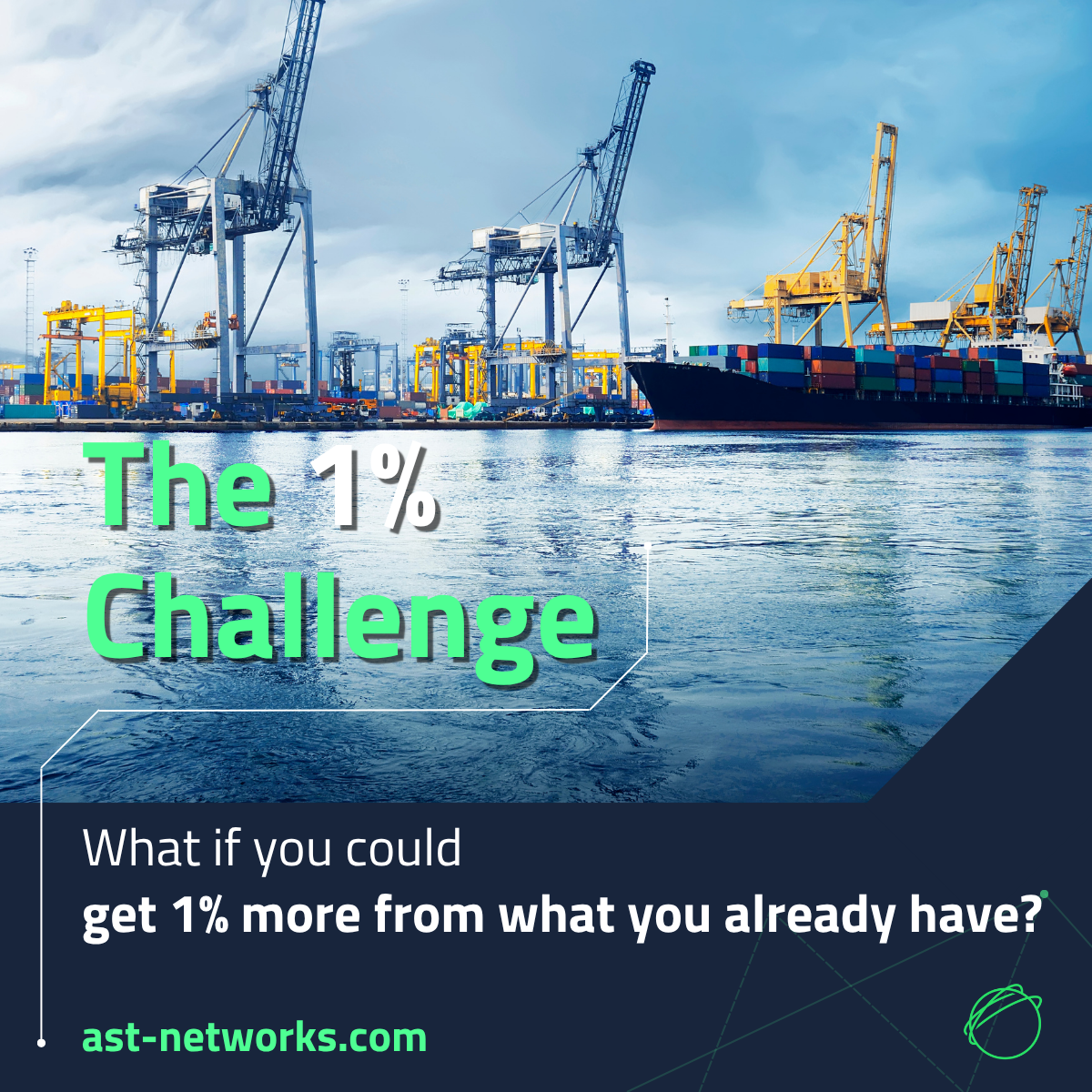
The AST Networks 1% Challenge: Get 1% More
Before investing in something new, are you using what you already have to its full potential? What if you could get 1% more from what you already have?
New technology often promises better performance, more efficiency and better control, and sometimes investing in new technology is the right decision, but it shouldn't always be the go to.
Vessels are complex working environments, with multiple systems, competing demands and different requirements depending on the vessel, its role and the way it operates. Over time, equipment changes, new applications are introduced and operational requirements evolve. What worked well before, may not be best fit for tomorrow.
That doesn't always mean the right thing to do is replace it, sometimes the solution is to make sure you're getting the most out of the systems you have already got.
There is a gap between investing in technology, and making sure you are making the most of it. Vessels might have connectivity supporting crew, but are there available services that could also be supporting operational requirements? A monitoring system collects useful information, but is that information reaching the people who could act on it? Equipment may be capable of doing more - but is it configurated probably in order to do so?
These are not all major shortcomings, they can be small gaps between what a system can do, and what a system is currently doing. And those gaps are not always obvious to spot, and 1% more from what you already have could make all the difference.
Technology is often introduced to resolve a specific problem, once that problem has been addressed attention often moves elsewhere. Meanwhile the vessel's requirements continue to change, new process arise, crews adapt and different demands are placed on existing systems. Your original system may still work perfectly well - the question is, could it work better?
It's easy to approach improvements by looking at the latest technology developments and asking where it could be used, but a more useful approach is to look at what the operation needs, and review your existing technology's capabilities to see if you can get more from it.
Could time consuming tasks be made simpler, is there an easier way to access information, have process become limited by routine? The answers for improvements could be new technology, but they could be from better configuration, making information more accessible, or helping people better understand the existing capabilities that they already have.
A full technology review could reveal the need for a technology upgrade, or it could reveal that you are not using what you have to its full potential, the important thing it to make sure understand your requirements before deciding how to address it.
Connectivity illustrates how the value of a system depends on what happens around it. A vessels connection might meet the immediate requirements of keeping people online, but what about ensuring reliable operational applications, remote technical support, and access to business systesm are always readily available.
Connectivity must be consistent, but it also needs to be used effectively. That doesn't mean faster connections or more expensive services, but it might mean making sure bandwidth is allocated effectively, understanding which applications are the most important and ensuring existing capabilities aren't being underused, it might mean getting 1% more from what you already have.
A full connectivity review may show the current service is no longer fit for purpose, either way, decisions need to be based on what the vessel needs - rather than the assumption that new is always better.
A small inefficiency on one vessel might seem insignificant, but across a fleet they soon accumulate, and if the same issue is present in multiple vessels, addressing it consistently saves time and simplifies processes. A successful change in one vessel may well offer a lesson that can be applied across a whole fleet.
However, different vessels have different technologies, requirements, crew, and operating conditions, so not all solutions that work on one vessel will be transferable across others. By identifying common challenges, operators can decide where improvements are worth exploring for fleets, and where regional differences need to be considered.
The objective is not to force the same solutions across all vessels, it's to find the opportunities that will help improve individual vessel performance.
More systems, more data, and more applications can introduce additional demands on crews and shore-based teams. If a new solution creates extra work without addressing a genuine need, it adds complexity not value. Sometimes the best solution is simplification, and often it may well be utilising what you already have, better.
Systems can be improved by removing unnecessary steps, or making existing processes easier to follow - these simple changes don't attract the same attention as a major technology investment, but they can make a meaningful difference to your day-to-day operations.
So, next time you are doing a technology review, ask yourself "Are we getting the best out of what we already heave?" before investing in new kit - you might already have the solution onboard, just not using it.
At AST, this is where our solutions come together. AST Reygar specialises in remote asset monitoring and vessel telemetry, helping operators access and understand information from onboard equipment and systems remotely. And connectivity provides an important part of making that happen.
Got a 1% challenge? Talk to us and let’s see how we can help. It worked for the British Cycling Team - it can work for you, too.
Ask an expert
Whether you are comparing networks, choosing equipment or checking what your vessel needs, our team will give you a straight answer. We usually reply within one working day.