AST Networks logo
CONTACT US

Building a Resilient Offshore Communications Setup for Maritime Operations

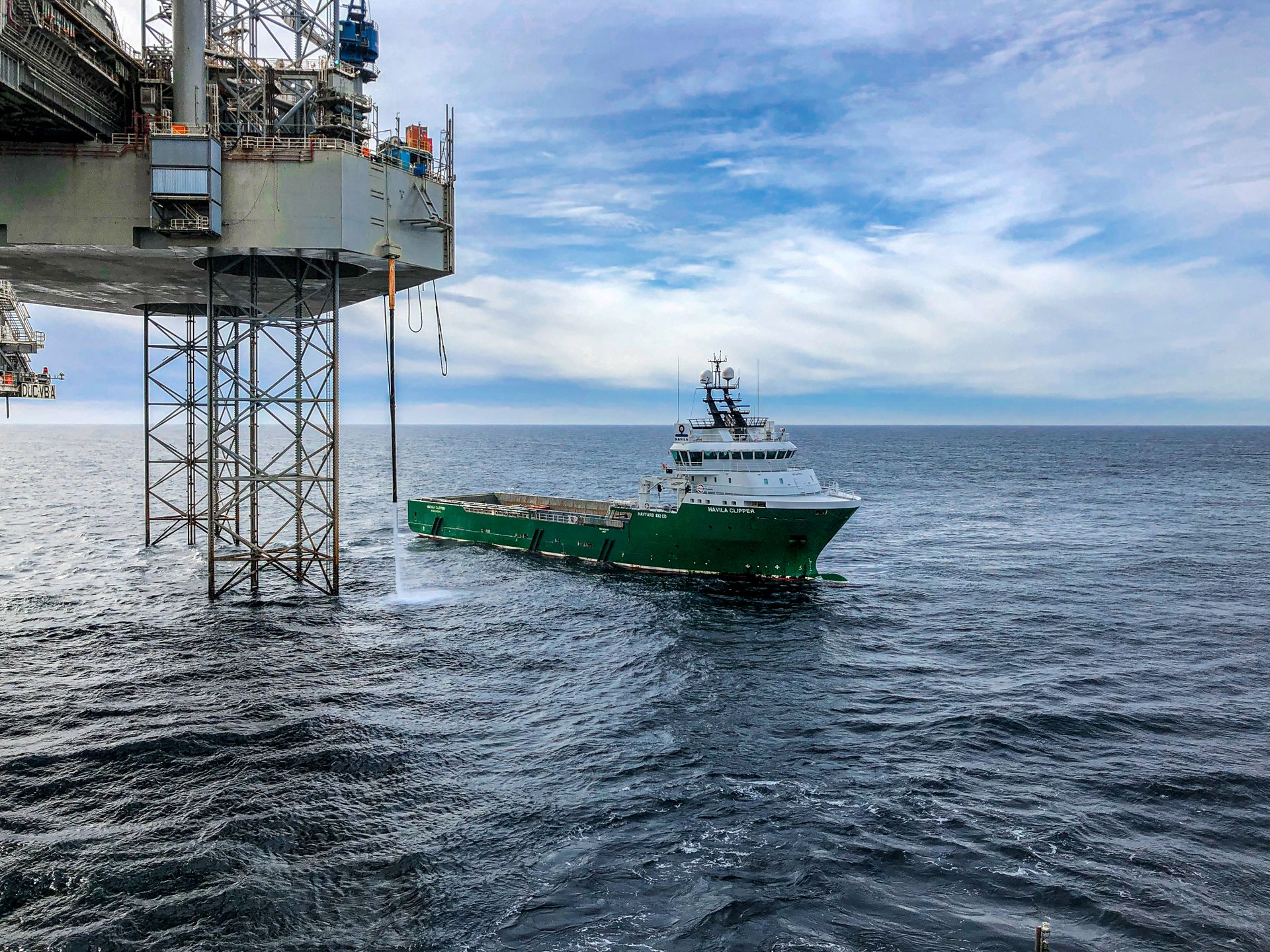
Boat near a rig to illustrate a blog on offshore communications

Blog

Offshore platforms, drillships, Service Operation Vessels (SOVs), and wind farm support craft operate in some of the most demanding environments on Earth. In these remote maritime sectors, relying on a single offshore communications link introduces severe commercial risk. Heavy weather, satellite occlusion, or localised hardware faults can cut off comms completely.

To maintain operational continuity, hybrid, multi-orbit satellite setups are required. Achieving reliable offshore communications requires selecting the correct combination of hardware, bandwidth management, and technical support.

Essential Setup for Offshore Communications Using a Satellite Communications Network

An enterprise-grade satcom setup for offshore vessels and platforms must satisfy three core operational criteria:

1. High Bandwidth with Low Latency

Offshore installations process massive volumes of operational data daily. Subsea survey feeds, remote machinery telemetry, video monitoring, and digital logbooks require continuous high-speed connectivity. Furthermore, low-latency links are essential for real-time remote engineering assistance and cloud application access.

2. Multi-Orbit Redundancy

No single satellite constellation guarantees 100% uptime in all weather conditions and geographic locations. A resilient architecture combines multiple orbits:

  • Low Earth Orbit (LEO): High throughput and low latency for heavy data tasks and crew internet.
  • Geostationary Orbit (GEO) VSAT: High-availability, guaranteed Committed Information Rate (CIR) for mission-critical operations.
  • L-Band / Mobile Satellite Services (MSS): Weather-resilient, low-power back-up links for emergency communications and GMDSS compliance.

3. Granular Bandwidth Management and Cyber Security

Unrestricted internet usage by crew members can choke critical operational channels. Offshore operators require bandwidth control platforms to prioritise mission-critical data over general traffic while protecting the vessel network against cyber threats.

Building an Enterprise Offshore Communications Architecture

AST Networks designs and integrates end-to-end satcom ecosystems for offshore communications, combining high-performance hardware, flexible airtime, and intelligent routing software.

A multi-orbit system combines distinct hardware and software components into a unified network:

Offshore hybrid connectivity architecture Onboard, the vessel or platform network carrying operational data, telemetry and crew Wi-Fi feeds into LinkBox+, which routes and fails over between three bearers: LEO, GEO VSAT and L-Band back-up. Traffic then reaches the shoreside INTEGRA network, where application control and security policy are applied, before passing to the internet, cloud and shore operations. LinkBox+ and INTEGRA are delivered as MODULA building blocks. MODULA HYBRID CONNECTIVITY AST NETWORKS ONBOARD Vessel / Platform Network Operational data / Telemetry / Crew Wi-Fi ALL PLATFORM TRAFFIC LinkBox+ INTELLIGENT ROUTING & FAILOVER SPACE SEGMENT LEO LOW LATENCY OneWeb / Starlink GEO VSAT GUARANTEED CIR Intellian / Cobham Cellular NEARSHORE 4G / 5G LTE L-Band BACK-UP Iridium / Inmarsat AUTOMATIC FAILOVER BETWEEN BEARERS SHORESIDE INTEGRA Network APPLICATION CONTROL & SECURITY POPs: London / Sydney / New York POLICY APPLIED IN THE GROUND NETWORK Internet / Cloud / Shore Operations Visibility and control via My AST Portal MODULA: LINKBOX+ AND INTEGRA DELIVERED AS BUILDING BLOCKS PRIMARY PATHS STANDBY / FAILOVER PRIORITISED TRAFFIC ast-networks.com Offshore hybrid connectivity architecture Onboard, the vessel or platform network carrying operational data, telemetry and crew Wi-Fi feeds into LinkBox+, which routes and fails over between three bearers: LEO, GEO VSAT and L-Band back-up. Traffic then reaches the shoreside INTEGRA network, where application control and security policy are applied, before passing to the internet, cloud and shore operations. LinkBox+ and INTEGRA are delivered as MODULA building blocks. MODULA HYBRID CONNECTIVITY ONBOARD Vessel / Platform Network Operational data / Telemetry Crew Wi-Fi ALL PLATFORM TRAFFIC LinkBox+ ROUTING & FAILOVER SPACE SEGMENT LEO LOW LATENCY OneWeb / Starlink GEO VSAT GUARANTEED CIR Intellian / Cobham Cellular NEARSHORE 4G / 5G LTE L-Band BACK-UP Iridium / Inmarsat SHORESIDE INTEGRA Network APPLICATION CONTROL POPs: London / Sydney / New York Internet / Cloud / Shore Managed via My AST Portal MODULA: LINKBOX+ AND INTEGRA BUILDING BLOCKS PRIMARY PATHS STANDBY / FAILOVER PRIORITISED TRAFFIC ast-networks.com

1. High-Speed LEO Terminals: Eutelsat OneWeb and Starlink

LEO satellite constellations orbit significantly closer to Earth than traditional GEO satellites, reducing latency to under 100 milliseconds.

  • Eutelsat OneWeb Enterprise Terminals: Designed for commercial maritime and energy applications, OneWeb delivers predictable, low-latency broadband throughput. Fixed parabolic or flat-panel user terminals ensure stable connectivity even in rough sea states.
  • Starlink Maritime Solutions: High-speed, flat-panel phased array antennas provide high-volume data capacity, supporting intensive crew welfare usage and heavy software updates.

2. High-Availability GEO VSAT: Intellian and Cobham SAILOR

While LEO networks deliver high speeds, GEO VSAT remains the foundation of offshore communications. GEO systems provide guaranteed bandwidth allocations backed by formal Service Level Agreements (SLAs).

  • Intellian VSAT Systems: Highly capable Ku/Ka-band antennas engineered to maintain precise satellite lock during heavy vessel motion.
  • Cobham SAILOR Antenna Systems: Rugged, industry-standard satellite terminals built specifically for commercial workboats, offshore support vessels, and energy platforms.

3. Weather-Resilient L-Band Backup: Iridium and Inmarsat

When Ka-band VSAT suffers rain fade and LEO terminals lose line of sight in heavy seas, L-Band keeps working. Its lower frequency passes through storm cover that defeats higher-band services, which is why it remains the backbone of safety for offshore communications.

  • Cobham SAILOR 6150 mini-C: Dedicated distress and safety terminal providing vessel tracking, Non-SOLAS distress functionality, and GeoFencing, sealed away from the general data network.

L-Band carries a fraction of the throughput of LEO or VSAT, but its role is not bandwidth — it is the link that survives when the others do not, which is what makes it a compliance requirement rather than an optional extra.

4. Intelligent Routing and Bandwidth Control

Hardware alone cannot guarantee performance. AST Networks integrates intelligent network hardware and software layers to manHardware alone cannot guarantee performance. AST Networks pairs onboard routing hardware with shoreside network services, delivered as MODULA building blocks:

  • MODULA Hybrid Connectivity: AST Networks' modular framework that combines flexible connectivity building blocks — including LEO, GEO VSAT, L-Band, and Cellular — into a single managed architecture. Rather than committing to a fixed service tier, operators assemble the blend they need now and scale it as demands change, reusing existing VSAT and L-Band antennas to reduce capital outlay.
  • LinkBox+ (onboard): The intelligent router at the centre of the platform network. LinkBox+ selects between available links based on signal quality, data cost, and operational priority, failing over automatically when a link degrades. It also segregates the network using VLANs, keeping operational and OT traffic isolated from crew and contractor Wi-Fi, and applies enterprise-grade encryption, firewalls, and SSL inspection at the network edge. Units are managed remotely by the AST Networks support team, who can create VLANs, amend firewall policies, and configure SSIDs without crew involvement.
  • INTEGRA Network (shoreside): The application-level control layer, applied at the point traffic reaches AST Networks' ground infrastructure, with points of presence in London, Sydney, and New York. Superintendents can identify what is genuinely consuming bandwidth by application category, block or limit non-essential traffic, and set data allowances per user — with fleet-wide reporting through My AST Portal.

Together, the two layers give offshore operators control at both ends of the satellite link: the LinkBox+ decides how traffic leaves the platform, and INTEGRA governs what it is permitted to do once ashore.age traffic flow:

Comparing Satellite Constellation Layers for Offshore Communications Assets

Offshore Communications Capability / MetricLow Earth Orbit (LEO)Geostationary (GEO VSAT)L-Band (MSS)
Primary ProvidersEutelsat OneWeb / StarlinkIntellian / Cobham (Inmarsat/SES)Iridium / Inmarsat ELERA
LatencyLow (<100ms)Higher (500ms – 700ms)Moderate (600ms – 800ms)
Throughput SpeedHigh (100Mbps – 400Mbps+)Scalable / Dedicated CIRModerate (128kbps – 700kbps)
Rain / Weather AttenuationLow to ModerateModerate to High (Ka-Band)Very Low (Extremely Resilient)
Primary Operational RolePrimary data & crew welfareCore operational link & SLAsEmergency backup & GMDSS safety

How AST Networks Supports Offshore Communications to Enable Operations

Deploying hardware is only the first step. Offshore energy and marine companies require ongoing technical support to maintain network uptime and resolve unexpected faults quickly.

AST Networks provides comprehensive managed services designed to keep offshore communications systems online 24/7/365:

24/7 Global Customer Technical Support for Offshore Communications

Our engineering support desk operates around the clock, giving technical superintendents and vessel masters direct access to experienced satcom engineers. Whether troubleshooting an antenna tracking fault or updating network configurations, technical assistance is always available.

Remote Network Configuration and Troubleshooting

Offshore assets are often located in hard-to-reach oceanic sectors, making physical technician visits costly and slow. AST Networks engineers utilise secure remote management gateways to diagnose, reconfigure, and restore onboard networks from shore, resolving network anomalies without delaying vessel schedules.

Managed Airtime and Flexible Data Pooling

Communication requirements fluctuate depending on vessel charter status and project phases. AST Networks delivers flexible airtime packages—including dynamic data pooling across sister vessels—ensuring operators avoid unexpected overage charges while providing bandwidth where it is needed most.

Secure Your Offshore Communications Connectivity Strategy

Relying on single-network for offshore communications or unmanaged hardware leaves your vessels vulnerable to unexpected signal loss, high airtime costs, and cyber vulnerabilities.

Implementing a multi-orbit offshore communications setup managed by AST Networks delivers the bandwidth, low latency, and operational resilience required to run safe, efficient, and fully connected marine operations.

Ready to design a resilient satellite communications system for your fleet or offshore platform?

Contact the AST Networks engineering team today to review your hardware and airtime requirements.

Ask an expert

Have a question? Ask our team

Whether you are comparing networks, choosing equipment or checking what your vessel needs, our team will give you a straight answer. We usually reply within one working day.

Ask an Expert (blog posts)
Marketing

We will only use your details to answer your question and, if you tick the box, to send occasional updates. See our privacy policy.

Related insights
Contact our Regional Offices
The AST Networks Advantage:
Gear Icon
Dedicated
Account Manager
Spanner Icon
24 / 7
Support Service
Hand Icon
Custom
Business Solutions
Email Subscribe
Copyright © 2025 AST Networks Registered in England Company No: 2153172, VAT No: GB 720 1086 83
CHAT WITH SUPPORT
linkedin facebook pinterest youtube rss twitter instagram facebook-blank rss-blank linkedin-blank pinterest youtube twitter instagram