Intellian

Digitalisation, LEO Connectivity and the advent of Fourth Industrial Age or Industry 4.0, are driving a truly disruptive transformation within the offshore energy industry. Implementing digital innovation and a data-driven approach in the business can enhance an organisation’s competitive advantage.
The combination of the digital world with the physical one is possible due to the Internet of Things (IoT). It can support a number of new use cases, helping the industry to connect supply chains, improve productivity, enhance worker safety and enable huge cost savings.
With the importance of environmental agendas and a post-pandemic need to future-proof industries and ensure economic security, digitalisation could be the solution to help balance productivity with financial and environmental gain.
"Digital technologies in the upstream oil & gas sector could result in cash in close to 20% savings."
PwC
Digital Twin has one of the largest potentials to positively affect the offshore energy industry out of all digitalisation technologies. The offshore energy industry is increasingly using digital twin technology to enhance efficiency and safety, reduce maintenance and operating costs, and support asset life extension. Coupled with sensors, the virtual representation of a physical asset and its behaviour allows operators to obtain greater insights in order to improve inspection, maintenance, and repair.
Using the network of IoT sensors for oil and gas extraction and processing helps maintain ongoing control in the supply chain and quickly respond to changes. Sensor-based technology can be leveraged to monitor the pressure in the pipes, oversee the drilling process, machinery conditions and detect leakages. In this industry, the high speed of addressing issues usually translates to billions of dollars in savings.
Oil major Shell estimates that digital technologies across all industries have the potential to enable a 20% reduction of global CO2 emissions by 2030, reducing emissions throughout the supply chain from areas such as unnecessary production and transport, as well as by catching accidents such as oil spills and gas leaks to mitigate (and sometimes entirely avoid) damages.
Tools such as sensors and predictive analytics help companies to identify sites of damage, sometimes before any leak has even occurred. AST Networks already supports a number of companies in identifying potential defects on maritime vessels using our iRAMS engine monitoring software to improve crew safety and reduce downtime.
In addition to the technologies like AI and digital infrastructures upgrades, oil and gas companies have also invested in hardware to enhance physical infrastructures.
For example, automation is being used to enhance the platforms themselves.
In October 2018, Equinor celebrated the start-up of the Oseberg H oil platform, the world’s first fully automated oil and gas platform. With no living quarters and no facilities, the platform is entirely unmanned, only requiring one or two maintenance visits a year.
Aker BP moved its Ivar Aasen operations in the North Sea to its Trondheim offices in January 2019, becoming the first company on the Norwegian Continental Shelf to operate a staffed platform from an onshore control room.
The platform was constructed with two identical control rooms, with one on the platform and one onshore. The onshore control room monitors production, facilities, equipment and all activity for the platform.
Automation has also been used to improve safety with ‘smart machinery’. Businesses can increase safety by putting in place a centralised, open communication system that links the entire organisation, enabling teams to monitor and report on conditions and occurrences in real-time. Automating dangerous processes will make them more efficient and decrease the possibility of errors resulting in worker injuries.
Wearables already boost efficiency and even save lives in this sector. Sensor-based suits, wristbands, smart glasses and helmets allow to continuously monitor the conditions of the workers who perform dangerous operations, seamlessly connect them with the base and even augment workers’ capabilities, providing timely advice, notification or warnings.
By exploiting AR helmets and other digital cleverness, for instance, Saudi Aramco has recorded a 70% increase in safety compliance, as well as a 10% improvement in workforce productivity.
Companies from BP to Chevron are going down a similar path, enticed by AR’s ability to offer digital documentation and step-by-step instructions to staff remotely, either on dry land or miles offshore.
The full realisation of these uses for the offshore energy industry relies on next-generation connectivity that delivers industrial-grade connections at high-speed and low latency. Evidently, Eutelsat OneWeb’s LEO connectivity solution is one that can provide high performance and consistent capability around the world, and do so while minimising offshore energy companies' investments, while they focus on core business activities.
Significantly, the solution integrates with other infrastructure and digital systems to enable a high-quality experience for the end users while delivering data across a diverse set of detailed use cases and business processes.
With a global network designed to deliver reliable, high-speed coverage everywhere, with LEO Connectivity, including above the 60th parallel north, OneWeb provides opportunities for critical high-performance.
Visit AST Reygar to learn about how they can help you reduce emissions and save money. BareFLEET is AST Reygar’s award-winning remote monitoring and asset management system for maritime vessels.
We are pioneers in developing cutting-edge remote monitoring and asset management systems specifically designed for marine applications. Our award-winning solutions empower you with accurate, real-time insights, ensuring optimal performance, safety, and efficiency for your assets as they navigate the high seas.
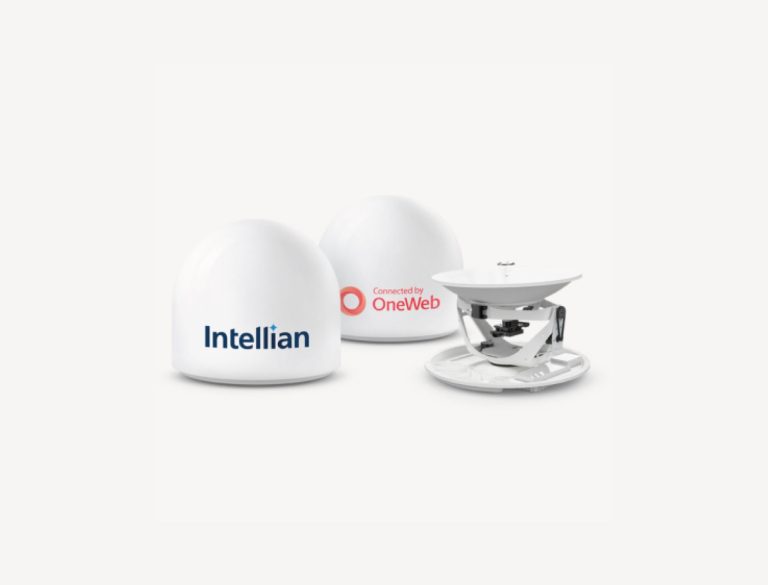
Equipment we supply for the connectivity covered above. Each product page has a downloadable product sheet.
Ask an expert
Whether you are comparing networks, choosing equipment or checking what your vessel needs, our team will give you a straight answer. We usually reply within one working day.