
Satellite telephony is the only voice technology that works everywhere, independent of terrestrial infrastructure. Where mobile networks depend on a tower within range and a functioning backhaul, satellite telephony connects the handset directly to a spacecraft, then to a ground station and onward to the public telephone network.
For vessels beyond coastal coverage, offshore installations, remote industrial sites and emergency response teams, that independence is the entire point. This guide explains how satellite phones work, how the three global satellite telephony networks differ, and where the technology's genuine limitations lie.
Satellite phones, (satphones) enable communication via satellites orbiting the earth, rather than relying on traditional terrestrial cellular towers, which is the connection network used for regular mobile phones. We have broken down the key points of how satellite phones work, in 7 handy takeaway points.


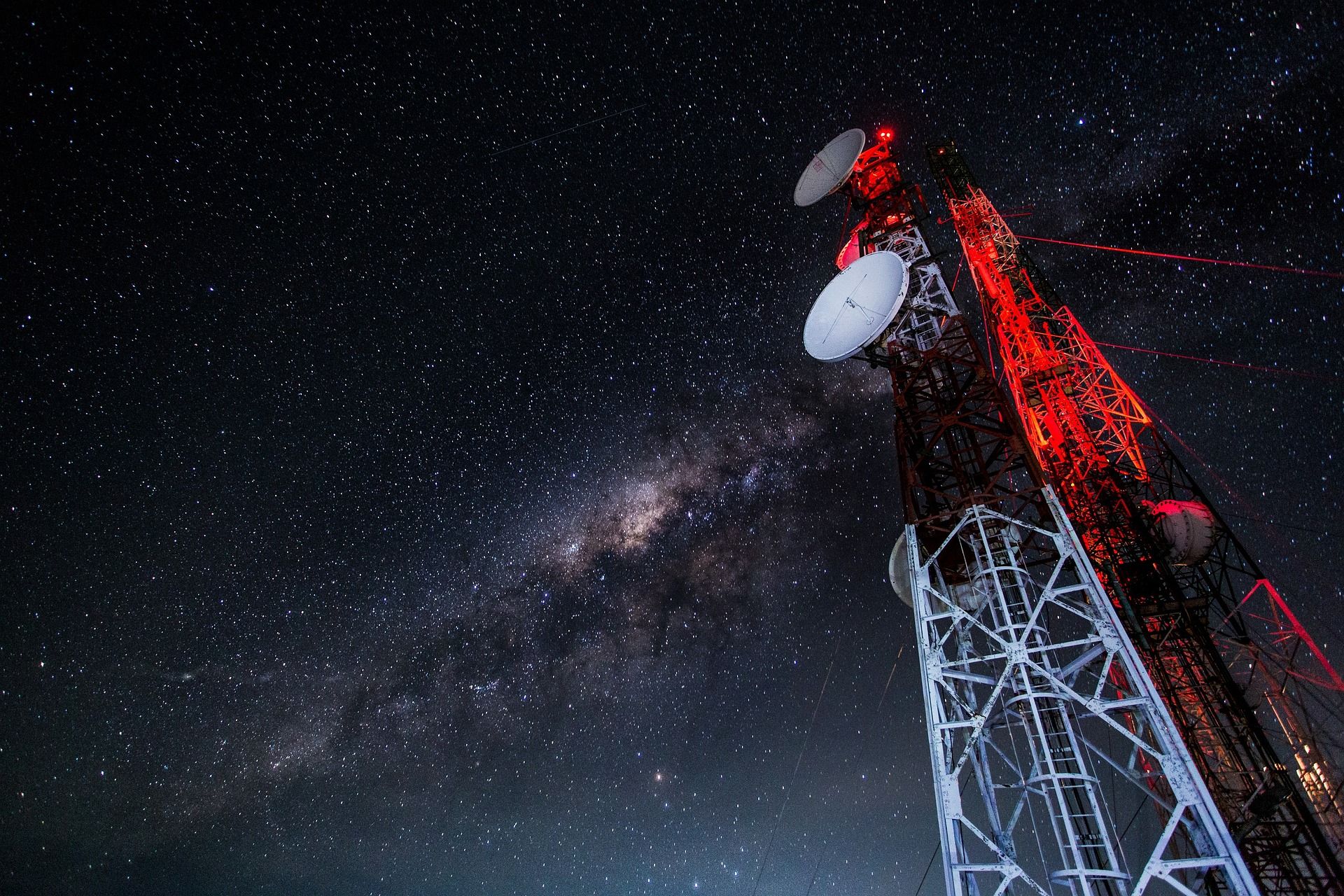




Overall, satellite phones provide a reliable and secure means of communication, especially in areas without traditional terrestrial network coverage.
Satellite phones are often crucial asset in safety kits, for both personal and industrial uses – acting as a lifeline for communication in many scenarios, such as humanitarian disaster, natural disaster, or remote expeditions.
For more information, contact us today.
Satellite telephony is voice communication carried over satellite rather than terrestrial networks. A handset transmits directly to an orbiting satellite, which relays the call to a ground station — often called a gateway or teleport — where it enters the ordinary telephone network and reaches any landline or mobile number in the world.
The reverse works identically. Someone can dial a satellite handset from any phone, and the call is routed through the gateway, up to the satellite and down to the device.
What distinguishes satellite telephony from mobile is that the network infrastructure is in orbit rather than on the ground. No masts, no local operator agreements, no coverage gaps caused by terrain or distance from shore.
Four stages, and understanding them explains most of the technology's characteristics.
1. Handset to satellite. The phone transmits on L-band frequencies, around 1.5 to 1.6 GHz. This band matters: lower frequencies pass through rain, cloud and storm cover far better than the higher Ku and Ka bands used for satellite broadband. It is why satellite telephony keeps working in weather that degrades a VSAT link.
2. Satellite to ground. The signal reaches a gateway. On some networks the satellite relays directly to a ground station within its footprint. On others, satellites pass traffic between themselves in orbit before downlinking.
3. Gateway to the telephone network. The gateway interconnects with the public switched telephone network, converting the call into standard telephony.
4. Onward delivery. The call completes to whichever landline or mobile number was dialled.
The practical consequence is that satellite telephony calls are not peer-to-peer between handsets. Even two satellite phones sitting side by side route their call through orbit and a gateway.
Three operators provide handheld satellite telephony services, and the differences between them are architectural rather than cosmetic.
Iridium operates a constellation of 66 cross-linked satellites in low Earth orbit, roughly 780 km up. Because the satellites are linked to one another in space, traffic can be routed between spacecraft before reaching a gateway, which is why the network achieves genuine worldwide coverage including both poles.
The low orbit also shortens the signal path, giving noticeably lower latency than geostationary alternatives. Iridium is also recognised as a provider for the Global Maritime Distress and Safety System, which matters to commercial vessels with statutory obligations.
The trade-off is cost. Complete global coverage commands a premium in both hardware and airtime.
Inmarsat uses geostationary satellites orbiting at approximately 35,786 km above the equator. At that altitude a satellite appears fixed in the sky, so the handset simply points toward it rather than tracking a fast-moving spacecraft.
Coverage is near-worldwide but excludes the polar regions, because a geostationary satellite sitting above the equator cannot see the high latitudes. Inmarsat has a long-established role in maritime safety communications and is generally the more economical route into professional satellite telephony.
The trade-off is latency. The signal travels roughly 36,000 km each way, which introduces a perceptible delay on voice calls.
Thuraya provides satellite telephony across Europe, the Middle East, Africa, Asia and Australia, but not the Americas. Within that footprint it is generally the most affordable option, and its handsets include dual-mode devices that switch between satellite and GSM.
The trade-off is obvious but frequently overlooked: a Thuraya handset carried outside the coverage region is an expensive paperweight.
| Network | Orbit | Coverage | Latency | Typical use |
|---|---|---|---|---|
| Iridium | Low Earth orbit, cross-linked | Worldwide including poles | Lowest | Ocean transits, high latitudes, expedition, GMDSS |
| Inmarsat | Geostationary | Near-worldwide, excluding poles | Higher | Maritime, offshore energy, remote industry |
| Thuraya | Geostationary | EMEA and APAC only | Higher | Regional operations within the footprint |
On commercial vessels these are not competing choices. Broadband carries the operational data, radio meets statutory requirements, and satellite telephony provides the weather-resilient voice link that survives when the others struggle.
If you are choosing a handset, our satellite phone buying guide compares the options in more detail. You can also browse our range of satellite phones from Iridium, Inmarsat and Thuraya, or talk to our team for advice on the right network for where you operate.
How does satellite telephony work without mobile towers?
The handset transmits directly to a satellite, which relays the call to a ground gateway connected to the public telephone network. The infrastructure sits in orbit rather than on the ground.
Can satellite telephony be used indoors?
No. A clear view of the sky is required. Fixed installations use an externally mounted antenna cabled to a docking station.
Which satellite telephony network has the best coverage?
Only Iridium provides genuinely worldwide coverage including the polar regions. Inmarsat covers most of the globe excluding the poles, and Thuraya covers a defined regional footprint.
Does satellite telephony work in bad weather?
Generally yes. The L-band frequencies used pass through rain and storm cover far better than the higher bands used for satellite broadband, which is why it is valued as a backup link.
Can you call a normal phone from a satellite phone?
Yes. Calls route through the ground gateway into the ordinary telephone network and reach any landline or mobile number.
The right choice follows from where you operate and why you need the link. Coverage should decide the network before price does, because a cheaper handset on the wrong network is worth nothing where it does not work. Beyond that, the questions are whether the device is a permanent installation or a portable one, whether statutory safety obligations apply, and whether airtime is better structured as prepaid or contract.
AST Networks supplies satellite telephony hardware, airtime and accessories across all three global networks, with 24/7 technical support and advice grounded in where your operation actually works rather than which handset is cheapest.
To discuss the right satellite telephony setup for your fleet, site or team, contact the AST Networks team.
Ask an expert
Whether you are comparing networks, choosing equipment or checking what your vessel needs, our team will give you a straight answer. We usually reply within one working day.


